Air source heating explained
The science and practicality of air source heat pump technology
What is an air source heat pump?
An air source heat pump is a heating and cooling system that extracts thermal energy from the outside air and transfers it indoors to provide year-round comfort. Instead of burning fuel to generate heat, it uses electricity to move existing heat from one place to another.
Air source heat pumps can provide heating in winter and optional cooling in summer from a single, sustainable system. Because they rely on renewable ambient air rather than fossil fuels, they are considered a low-carbon alternative to traditional gas, oil and LPG boilers.
Even cold air contains usable heat energy. Thermal energy is simply the energy stored in moving particles — the faster they move, the warmer they become. By capturing and concentrating this energy, an air source heat pump can warm your home efficiently, even when outdoor temperatures are low.
As UK households face rising energy costs and increasing climate pressures, more homeowners are switching to air source heat pumps for reliable, year-round comfort. Traditional central heating systems that burn fossil fuels can be costly, inefficient and carbon-intensive. In many cases, replacing or upgrading to an air source heat pump can improve energy efficiency while reducing emissions.
Whether you’re looking to replace your entire heating system, lower your energy use, or maintain a comfortable indoor climate in both winter and summer, understanding how air source heating works is the first step.
How do air source heat pumps work?
Air source heat pumps work by extracting warmth from outdoor air, increasing its temperature through compression, and transferring that heat into your home. This process allows them to operate efficiently even at sub-zero temperatures, making them suitable for year-round use.
The basic principle can be understood through a simple example: when inflating a bicycle tyre, the valve becomes warm as the air is compressed. Compression increases temperature — and this same principle powers heat pump technology.
In practice, the system operates in three stages:
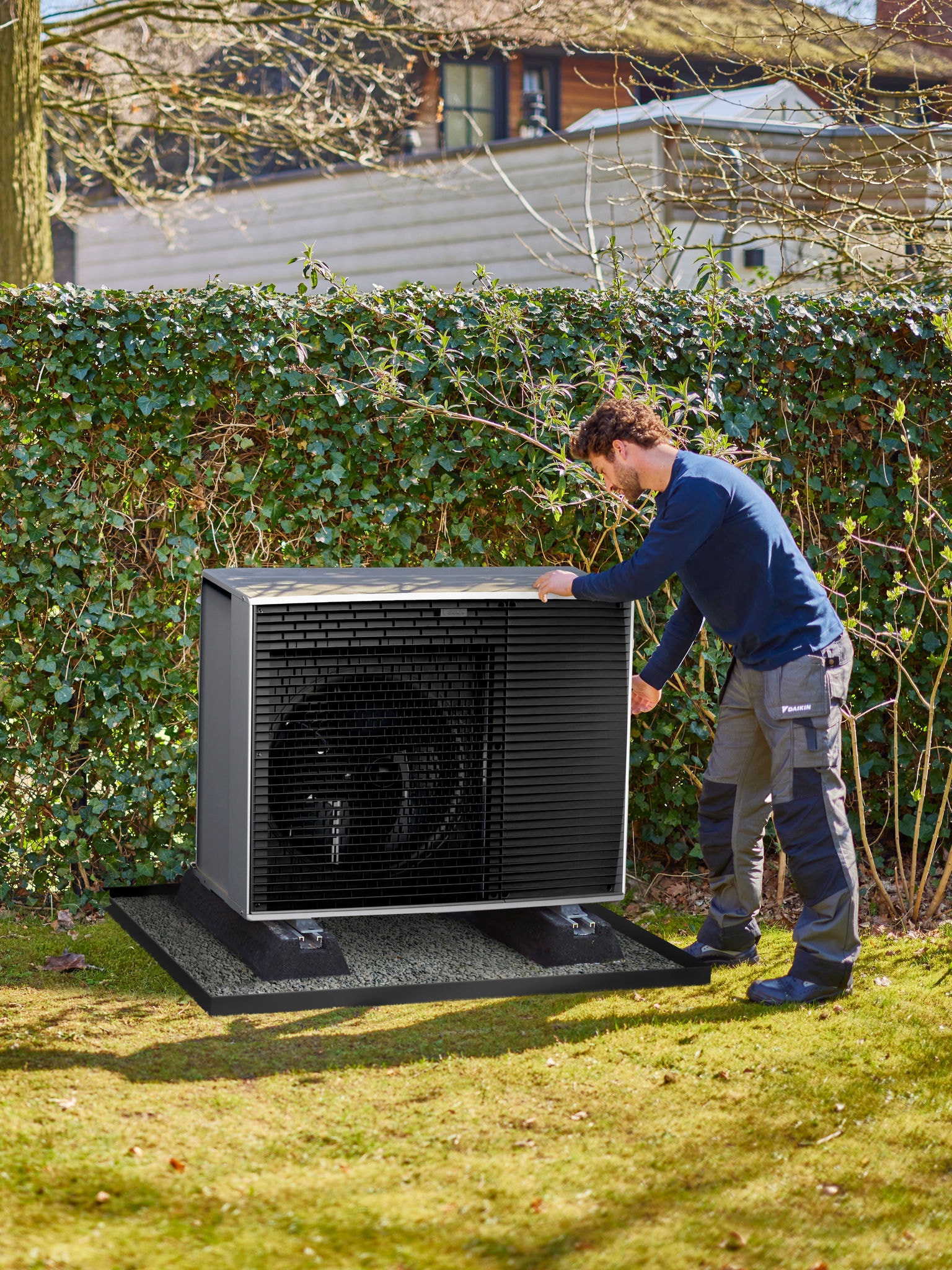
The outdoor unit absorbs heat from the surrounding air.
A compressor raises the temperature of that heat.
The heat is transferred indoors, either as warm air (air-to-air systems) or heated water (air-to-water systems).
Because the system moves heat rather than generating it through combustion, it can deliver significantly more heat energy than the electricity it consumes.
If you’d like a deeper technical explanation of the refrigeration cycle and system components, read our guide on how do heat pumps work.
Types of air source heat pumps
There are two types of air-source heat pumps: air-to-air and air-to-water.
Air-to-air heat pumps
Air-to-air heat pumps are also known as air conditioning. They provide heating by blowing warm air into your home, and can also provide cooling by reversing the process.
How air-to-air heat pumps work
Air-to-air systems move heat between the outdoor air and the air inside your home. An outdoor unit absorbs heat, even in winter, and a compressor boosts that heat to a usable temperature. Indoors, a fan blows air over a heated coil, distributing warmth. In summer, the cycle reverses, acting as air conditioning.
Air-to-water heat pumps
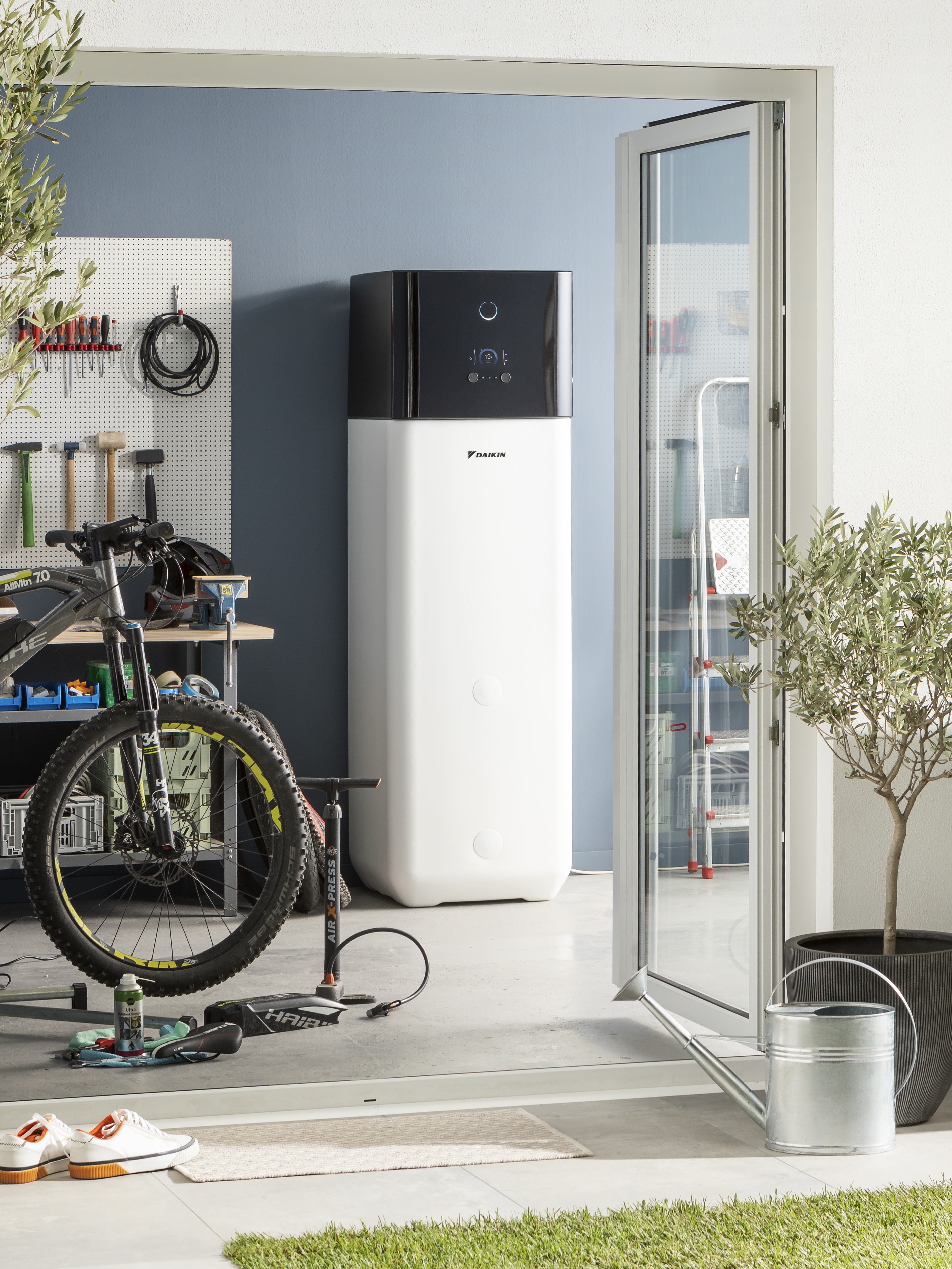
Air-to-water heat pumps heat water that is used for radiators and underfloor heating. They also supply hot water to taps.
How air-to-water heat pumps work
These systems extract heat from outdoor air but transfer it into water instead of air. The heated water feeds radiators, underfloor heating, or a domestic hot water tank. They are particularly efficient with low-temperature heating systems such as underfloor heating and can supply hot water for taps and showers.
How efficient are air source heat pumps?
Air-to-air and air-to-water systems both use electricity, but they are far more efficient than traditional boilers. Their efficiency is measured by the Seasonal Coefficient of Performance (SCOP). Air-to-water heat pumps typically achieve a SCOP of around 4, meaning four units of heat are generated for each unit of electricity used. While SCOP decreases in colder weather, heat pumps perform well year-round and are widely used in cold climates such as Scandinavia. For optimal performance, homes should be well insulated and the system correctly sized.
Costs and benefits
Air-to-air heat pumps
Air-to-air heat pumps (also referred to as air conditioning systems) are generally more affordable to install than air-to-water systems, as they do not require integration with a water-based heating network.
In smaller properties, single-split systems can sometimes be installed within a range of €1,300–€3,500, depending on system capacity and installation complexity.
Costs vary based on:
- The required output capacity
- The number of indoor units
- Installation accessibility
In terms of efficiency, air-to-air systems can achieve SCOP values above 5 under optimal conditions, although most models average around 3–4 seasonally. They also offer broad product choice, and all models can provide cooling as well as heating when required.
By monitoring energy consumption, homeowners can determine when operating the system is most efficient compared to alternative heating sources.
One limitation compared to air-to-water heat pumps is that a separate domestic hot water system is usually required. However, some manufacturers offer configurations that allow connection to a domestic hot water tank. Space is also needed for the indoor units, whether wall-mounted or ceiling-installed.
Air-to-water heat pumps
Air-to-water heat pumps are designed to replace your entire central heating system. In some cases, it’s possible to use your existing radiators.
Traditional radiators are typically smaller and designed for higher flow temperatures, which may affect overall system efficiency. In certain properties, radiator upgrades may be recommended to optimise performance.
A typical installation ranges between €8,460–€15,000, depending on property size, insulation level and required system modifications.
If the installation is part of a new build or major renovation, overall integration can be simpler, which may reduce installation complexity and associated costs.
Air-to-air vs. air-to-water: key differences
Feature | Air-to-air | Air-to-water |
Heating source | Warm air | Heated water |
| Heating | Good | Very good (especially with underfloor heating) |
| Cooling | Yes | Yes |
Domestic hot water | Depends on the manufacturer | Yes |
Installation cost | Lower | Higher |
Installation complexity | Simpler | More complex (depends on existing distribution system) |
Climate suitability | Mild to cold | Mild to very cold (with right unit) |
Environmental benefits of air source heat pumps
As the UK government tightens carbon-reduction targets, the role of renewable heating technologies has become central to achieving net zero goals. Air source heat pumps can reduce household CO₂ emissions by more than half compared to gas boilers, thanks to their reliance on renewable ambient energy.
By using air — a freely available natural resource — and minimal electricity, air source systems significantly cut dependence on fossil fuels. For many households, this means both lower running costs and a tangible contribution to national climate targets.
Installation and operational considerations
Air-to-air heat pumps installation
Air-to-air systems are generally quicker and easier to install. They typically require only an outdoor unit and one or more indoor air-handling units, with minimal disruption to the home. Because the system heats and cools air directly, no changes to the home’s plumbing or heating distribution are needed. As a result, installation costs tend to be lower than air-to-water systems.
In terms of efficiency, they operate well in mild to cold climates and provide efficient heating and cooling, though their heating efficiency is usually somewhat lower than well-designed air-to-water systems, especially in very cold weather.
Air-to-water heat pumps installation
Air-to-water systems involve a more complex installation because they connect to the home’s water-based heating system—radiators, underfloor heating, or both. They typically require an outdoor unit plus a hydraulic module, domestic hot water tank, and circulation components. This means installation costs are commonly higher.
However, they offer excellent overall operational efficiency, particularly when paired with low-temperature emitters such as underfloor heating. They’re well suited to colder climates and have the added advantage of producing domestic hot water, offering a full heating and hot-water solution.
Air source heating vs traditional systems
Rather than producing short bursts of high heat, air source systems deliver steady, low-temperature warmth over longer periods, maintaining consistent indoor comfort while using less energy overall. This makes them particularly well suited to homes with good insulation and modern radiators or underfloor heating systems.
Crucially, air source heat pumps eliminate direct carbon emissions and drastically reduce dependence on gas or oil — a growing advantage as energy prices fluctuate and governments tighten regulations on fossil-fuel heating.
While installation requires an upfront investment, long-term energy savings, lower maintenance costs, and potential government incentives make heat pumps a cost-effective choice. As the UK moves toward net zero and phases out new gas boiler installations, switching to an air source system represents a future-proof investment that benefits both homeowners and the planet.
Smart integration: controls and automation
Modern heat pumps work seamlessly with smart thermostats and scheduling systems, allowing homeowners to monitor and adjust temperatures remotely. Paired with energy-tracking apps, they provide insights into consumption patterns, helping users fine-tune performance and save energy.
Daikin heat pumps work with our Onecta app, which can, from any place at any time, control and monitor the status of your heating system.
Heating system configurations
An air-to-air heat pump does not integrate with radiators. It works by heating and circulating air directly into a room, like an air conditioner in reverse, and does not heat water for a wet central heating system.
Meanwhile, air-to-water systems integrate with radiators, underfloor heating, or hybrid arrangements alongside existing boilers. This flexibility makes them particularly suitable for both new builds and retrofits, allowing you to transition to renewable heating at your own pace.
Cooling features in summer
With the UK experiencing hotter summers and more frequent heatwaves, along with increasingly better insulated houses, the cooling function of an air source heat pump is becoming increasingly valuable. The same system that provides winter warmth can be reversed to deliver chilled air or water in summer, offering efficient, quiet, and reliable cooling without the cost and noise of mobile air conditioning units.
Air source heat pump lifespan and maintenance
Air source heat pumps are designed for durability, with an average lifespan of 15–20 years when regularly serviced. Their efficient design — with few moving parts and no combustion — means less wear and lower maintenance than traditional boilers.
Only one annual service is typically needed to check refrigerant levels, filters, and electrical components. Between visits, simple steps such as clearing debris from the outdoor unit and keeping vents clean help maintain performance year-round. Adjusting system settings with the seasons also optimises efficiency.
This combination of long life, easy upkeep, and intelligent monitoring makes air source heat pumps a dependable choice for efficient home comfort.
Water heating integration
All air-to-water heat pumps can provide domestic hot water, offering a complete home solution for heating, cooling, and everyday use. By capturing heat from the air, they efficiently warm water for showers and taps while keeping energy consumption low.
This flexibility makes air source heat pumps a practical, sustainable option for year-round comfort and reduced carbon emissions.
Government support and regulations
The governments is promoting low-carbon heating systems through regulations and funding. Incentives such as Boiler Upgrade Scheme, VAT reductions, and net-zero building standards make it easier for homeowners to transition away from fossil fuel systems
Common concerns about air source heat pumps
Concern: “Do heat pumps work in very cold weather?”
Explanation: Yes. Modern air source heat pumps extract heat even at –28°C and are designed specifically for European winters.
Concern: “Are heat pumps only suitable for residential buildings?”
Explanation: No. Air source systems are highly scalable and can be used in apartments, detached homes, commercial buildings and even industrial applications.
Concern: “Is maintenance expensive?"
Explanation: In most cases, maintenance requirements are minimal and typically less costly than traditional boiler servicing.
Choosing the right heat pump
When choosing a heat pump, key factors to consider include:
- Seasonal efficiency (SCOP)
- Noise level
- Correct capacity sizing
1. Seasonal efficiency (SCOP)
The Seasonal Coefficient of Performance (SCOP) measures how efficiently a heat pump performs across an entire heating season. The higher the SCOP, the less electricity is required to produce the same amount of heat — reducing both energy bills and carbon emissions.
For example, the Daikin Altherma 4 H is rated A+++ for space heating at both 35°C and 55°C leaving water temperatures. It also operates reliably in ambient temperatures down to –28°C, demonstrating strong cold-climate performance and high seasonal efficiency.
2. Noise level
Noise is a practical issue, especially in residential settings. Modern air source heat pumps are designed with sound optimisation in mind.
For instance, the Daikin Altherma 4 H reports an outdoor unit sound level of just 28 dBA at 3 metres, making it suitable even in noise-sensitive neighbourhoods.
3. Correct capacity sizing
It’s also vital that the heat pump is sized correctly. An undersized unit won’t meet your heating needs in peak cold, while an oversized one will cycle inefficiently and waste money.
In summary: pick a system with a high SCOP rating, quiet operation and the right size for your home. Selecting a reputable system gives confidence that these features aren’t just theoretical — they’re built into real, market-ready systems.
Upgrading from a gas boiler
Transitioning from a gas boiler to an air source heat pump involves several key steps:
- Removing and safely disposing of the old system
- Assessing home insulation
- Updating wiring or ducting to ensure compatibility
A certified engineer handles proper sizing and installation of the new outdoor unit. This upgrade reduces carbon emissions and helps future-proof your home against the phase-out of fossil-fuel heating.
Is an air source heat pump right for you?
Air source heat pumps represent a practical and forward-looking solution for modern home comfort. By combining high efficiency, year-round heating and cooling, and major carbon reductions, they address both rising energy costs and environmental responsibilities.
With improving technology, supportive government policies, and proven performance even in cold climates, air source heat pumps are no longer a niche option - they are a smart, sustainable choice for future-ready homes.
Key takeaways
- Air source heat pumps deliver heating, cooling, and - in air-to-water systems - hot water from a single, integrated unit.
- Air source heat pumps operate efficiently, even in cold climates.
- Air-to-air systems are cheaper and easier to install; air-to-water systems replace central heating.
- Correct sizing and insulation are critical for performance.
- Long lifespan and low maintenance improve long-term value.